





We all know that a good person can be a bad artist.
But no one will ever be a genuine artist
unless a great human being and thus also a good one.

Marc Chagall

Imagination is everything. It is the preview of life's coming attractions.
Imagination embraces the entire world,
and everything there will be to know and understand.
Imagination points to all we might yet discover and create.

Albert Einstein

Be who you are and say what you feel because those who mind don't matter
and those who matter don't mind.

I ♥! Dr. Seuss

The future belongs to those who believe in the beauty of their dreams.
Eleanor Roosevelt


Seven Rules of Creative Production by Lasseter (from an interview with the German newsmagazine Sueddeutsche Zeitung)

 
The best ideas come as jokes. 
Make your thinking as funny as possible. 
David Ogilvy
 

1. Never come up with just one idea. “Regardless of whether you want to write a book, design a piece of furniture or make an animated movie: At the beginning, don’t start with just one idea – it should be three. “The reason is simple. If a producer comes to me with a proposal for a new project, then usually he has mulled over this particular idea for a very long time. That limits him. My answer always reads: ‘Come again when you have three ideas, and I don’t mean one good and two bad. I want three really good ideas, of which you cannot decide the best. You must be able to defend all three before me. Then we’ll decide which one you’ll realise. “The problem with creative people is that they often focus their whole attention on one idea. So, right at the beginning of a project, you unnecessarily limit your options. Every creative person should try that out. You will be surprised how this requirement suddenly forces you to think about things you hadn’t even considered before. Through this detachment, you suddenly gain new perspectives. And believe me, there are always three good ideas. At least.”

2. Remember the first laugh. “A big problem in the creative process is related to the enhancement of your ideas,” cautions Mr Lasseter. “Revising, retouching, refining is very important, but it carries a danger. “If you have a story, a joke, a thought, which you write down, it loses its effect over time. It wears itself out. When you hear a joke for the second time you still laugh heartily, on the third or fourth occasion already less so, and when you hear it the hundredth time, you hate it. I say to my authors: ‘Take notice of the first laugh, write it down if necessary. This may at times be bothersome, but it is important. Many times, good things got lost because people could not remember anymore how it felt when they heard the idea for the first time.”

3. Quality is a great business plan. Period. “There is a crucial rule: no compromises. No compromises on quality – regardless of production constraints, cost constraints, or a deadline. If you get a better idea, and this means that you have to start again from scratch, then that’s what you have to do. “In any creative industry, quality is the sole business plan that prevails in the long run. Many managers fail to understand that, but the spectators understand it. The process is only finished once the creative professional in charge says it’s finished. That does not mean that there isn’t to be any pressure – there’s pressure all the time anyway – but the individual creator always needs to have the last word.”

4. It’s the team, stupid. “One of the most popular questions is always whether groups are more creative than individuals. My answer: In most cases, it’s the team – provided you follow certain rules”, says Mr Lasseter. “As a manager, it is my task to abolish hierarchies. It doesn’t matter at all who has the idea; that’s a very important rule for us. The group must be honest, direct, and endeavour to sincerely help the creative individual. But in the end, nothing that the group says is binding”.

5. Fun invokes creativity, not competition. “There is this idea that you put two people, who cannot stand each other, into a room, hoping that all this negative energy leads to a creative result. I disagree. Co-operation, confidence and fun – that is the way”, says Mr Lasseter. He emphasises the complex managerial challenge to successfully motivate creative employees, and to create a climate conducive for creativity. “Creative people must believe that all others support them in making a great movie. They need to believe that all people involved understand what they talk about. Creative people are easily bored, moody, a bit difficult to handle. You have to make it fun for them, care for them. Creative people only produce really good work if you creatively challenge them. They have to like what they’re working on. They have to be damn proud of the fact that they’re a part of a particular project. That is again the task of the manager. Each time, you have to give them creative challenges. That’s difficult, but nobody said it is easy to lead creative people.”

6. Creative output always reflects the person on top. “Poor managers harm the creative process,” as John Lasseter knows from personal experience. After landing his dream job as animator at the Disney Animation Studios in the late seventies, his outspoken individuality and creative extravaganzas quickly made him enemies among mediocre middle managers at Disney. Within a few years, Mr Lasseter became a victim of internal politics and got fired. Committed to go his own way, Mr Lasseter became one of the founders of Pixar in 1986. Twenty years later, following Pixar’s acquisition by The Walt Disney Company, Mr Lasseter returned in triumph as chief creative officer of both animation studios.

“Laughter, being crazy, freaking out, behaving in ridiculous manner are hard work. A manager who spreads his bad mood and who forbids his employees to have fun impairs their creativity, and thus harms the enterprise. I would fire him. Animated movies are not least a bang-hard business. I cannot risk so much money, only because a manager indulging in his bad mood harms my business.”

7. Surround yourself with creative people whom you trust. Being an accomplished creative leader, John Lasseter gives some direct advice to junior creative leaders in progress. “Bring only those new members into your creative team, whom you consider to be at least as talented as you. If they also have a pleasant and nice character – even better. Most managers don’t follow this approach, as they are insecure. Insecurity and creativity do not get along with each other well. Most managers surround themselves with yes-men, and in result, the audiences get bad films to see,” explains Mr Lasseter.

“When I am working on a problem I never think about beauty. I think only how to solve the problem. But when I have finished, if the solution is not beautiful, I know it is wrong.” Buckminster Fuller

Role Model to Superheroes: the Father of Horace (and Horace)

The elder Horace, a freed slave, was able to spend considerable money on his son’s education: accompanying him first to Rome for his primary education, then sending him to Athens to study Greek and philosophy. The poet later expressed his gratitude in a tribute to his father:
If my character is flawed by a few minor faults, but is otherwise decent and moral, if you can point out only a few scattered blemishes on an otherwise immaculate surface, if no one can accuse me of greed, or of prurience, or of profligacy, if I live a virtuous life, free of defilement (pardon, for a moment, my self-praise), and if I am to my friends a good friend, my father deserves all the credit… As it is now, he deserves from me unstinting gratitude and praise. I could never be ashamed of such a father, nor do I feel any need, as many people do, to apologize for being a freedman’s son.  Satires 1.6.65–92
 

Project Gutenberg
http://www.gutenberg.org/browse/authors/h#a1790

The Latin Library
http://www.thelatinlibrary.com/hor.html

Role Model to Superheroes: Maya Angelou

 
Phenomenal Woman
 
Pretty women wonder where my secret lies.
I’m not cute or built to suit a fashion model’s size
But when I start to tell them,
They think I’m telling lies.
I say,
It’s in the reach of my arms
The span of my hips,
The stride of my step,
The curl of my lips.
I’m a woman
Phenomenally.
Phenomenal woman,
That’s me.
 
I walk into a room
Just as cool as you please,
And to a man,
The fellows stand or
Fall down on their knees.
Then they swarm around me,
A hive of honey bees.
I say,
It’s the fire in my eyes,
And the flash of my teeth,
The swing in my waist,
And the joy in my feet.
I’m a woman
Phenomenally.
Phenomenal woman,
That’s me.
 
Men themselves have wondered
What they see in me.
They try so much
But they can’t touch
My inner mystery.
When I try to show them
They say they still can’t see.
I say,
It’s in the arch of my back,
The sun of my smile,
The ride of my breasts,
The grace of my style.
I’m a woman
 
Phenomenally.
Phenomenal woman,
That’s me.
 
Now you understand
Just why my head’s not bowed.
I don’t shout or jump about
Or have to talk real loud.
When you see me passing
It ought to make you proud.
I say,
It’s in the click of my heels,
The bend of my hair,
the palm of my hand,
The need of my care,
‘Cause I’m a woman
Phenomenally.
Phenomenal woman,
That’s me. 

It’s Personal: This is Why I Trust Artists #thePowerofArt

 
It is possible nothing will stop the hatred — unless you MOVE. Your guidance counselors may not notice; no one may understand. It does get better though — entirely different — when you are around enough varied people that you are able to choose friends who accept you — being gay or mistaken for gay or whatever your uniqueness may be. The best thing I’ve found is to move. Decisively change your physical location. To a place with varieties of people. Spend time only with those who accept you. Do not try to be friends with everyone; you do not need anyone’s approval. Invest in yourself and your skills until you can afford to change your social environment completely. There is nothing wrong with you — or your children or siblings or whomever may be reading this. There are a whole bunch of friends out there waiting to have fun with exactly who you are.

—-
When you’re a young heterosexual guy who draws and reads a lot, quietly living with a vivid personal world — and when you move around every few years…from a hippie community in Central Coast California to a small-town multi-generational cliquish Catholic school in suburban Maryland — and then when in sixth grade after a few days at your new school you say it “doesn’t matter if people are gay”…and then, when classmates are lined up asking you to repeat this in front of others who you thought were your new friends — and you’re so fed up and obstinate and naive you want to flippantly say, “Yeah I’m gay” — out of contempt and a mistaken impression that you are actually standing up for someone…Don’t. It’s not your fight. Wait to take it up when you are older. You are not going to change anyone’s mind in sixth grade.

Sarcasm: the last refuge of modest and chaste-souled people when the privacy of their soul is coarsely and intrusively invaded.  Fyodor Dostoevsky 

That ‘political sarcasm’ in those few hours on the first week of sixth grade defined my life for YEARS. I was fortunate to be able to take a girl from another high-school to prom (she was beautiful, bright, and cool but the still lingering stigma from a misdirected stance in the last year of elementary school continued defining my social life through a very conservative high-school). Then when I finally went to college — far, far away — I met a wonderful girl (a preacher’s kid) with whom I basically had more sex than most married couples in several lifetimes. Easily. With vengeance. Thank God. (Thank you Heather.)

It was a stroke of luck my family was able to afford college. It is painful to imagine what it must be like for those less fortunate to be locked in contingent accidental social relationships which oppress them. Move. Keep changing the combination…sooner or later you will find your friends. It is certainly not your fault. You are a fun person, you just have to find the right people to have fun with — there are a lot of people who will like you for being exactly the way you want to be.

“Don’t ask yourself what the world needs. Ask yourself what makes you come alive and then go do that. Because what the world needs is people who have come alive.” Howard Thurman

Role Model for Superheroes: Ares (Ἄρης) Leader of Righteous Men

 
Why did Aphrodite love Ares?
 

Why are these two gods the only passionate lasting truly romantic lovers in all of Greek and Roman mythology?

Why was Ares the true love of the Goddess of Love? Bloodthirsty Ares, Ares the destroyer, despised Ares, Ares god of war. Ares hated by Olympians, distrusted by all except Aphrodite. Why? Good Male Passion.

He was not considered the strongest god — even Aphrodite’s legal husband Hephaestus, patron of blacksmiths, might have been stronger.  Most gods were physically fit: Apollo beat Ares at Olympic boxing; the physically strongest was Hercules. Ares is never portrayed as a hulking giant.

Rape is a constant theme in mythology. Isn’t it strange there is not a single attribution of non-consensual sex to him. That is important. It is exceptionally unusual. Character defining.

The friends of Ares with whom he walks through Thracian woods deep in thought are Themis, the personification of Divine Law, and Dike, the personification of Justice and Fair Judgement.

There are other names for this misunderstood archetype — portraits now forgotten in popular culture: Leader of Righteous Men, Defender of Cities, Father of Victory, Ally of Divine Law, Friend of Justice. Bold Ares. Courageous Ares. Loyal, Trustworthy Righteous Indignation Incarnate.

Prayers to Ares ask for help avoiding the folly of personal hubris and blind arrogance, weaknesses attributed to this archetype. Ares was expected to marry Aphrodite.  In mythology Zeus offered her to anyone able to open her cage. Ares’ over-confident raw passion failed, rendering Aphrodite and Ares heart-broken; the cunning inventions of Hephaestus, blacksmith to the gods, won her legal marriage.

These personifications of Male and Female passion nevertheless had six children: Harmonia, Eros, Phobos, Demos (Dread), Adrestia (Revenge), and Anteros (Requited Love). They continued their love despite her husband.

I am fascinated by this undomesticated hero, this bane of tyrants, leader of rebels, maker of civil unrest. I am also disgusted this personality-type which once served as an ancient noble role-model has been blasphemed as bloodthirsty, impetuous, and unkind.

Ares personifies the difference between a Good Man and a sycophantic Nice Guy. The former stands up for brutal virtues, leading to depth of character, responsibility, and passion-filled life purpose; the later submits to whims, purposes of others — everything: his soul, his heart, his goals, his love…always approachable, endlessly patient, a polite woman with ED. (It’s interesting the sister of Ares, Athena, goddess of wealth, wisdom, strategic warfare — is a virgin.)

Today why are two-thirds of divorces initiated by women?? Why are Iron John and No More Christian Mr. Nice Guy (a book written by a Christian minister, forwarded by a Jewish woman) — bestsellers??

Aphrodite loved Ares. His person, spirit, sense of self.  In Strong Hearted Ares she met a man with a beautiful mission unswayed. Ares could speak to the most irresistible goddess as a person. He could care for her interests apart from his physical desire. Ares’ strength was to see her beauty while retaining his. Upon Aphrodite other gods fawned, lost composure, flattered and grasped. They became meek and mild: pristine, clean, smooth, soft, unscarred, flatterers — dishonest hypocrites. Pleasant. Unconfrontational.

In Ares, Aphrodite found the archetypical male, a man pursuing his own righteous interests. She found a friend who would place her “inside the shield,” someone who would stand up for and protect her, but also tell her the truth, encourage her potential, and withstand shallow pleas and supplications. Aphrodite found a friend. Ares Gravitas. A companion. Theirs was true love.

http://en.wikipedia.org/wiki/Ares
http://www.theoi.com/Olympios/Ares.html
http://en.wikipedia.org/wiki/Mars_(mythology)
Friends of Ares: 
http://en.wikipedia.org/wiki/Themis
http://en.wikipedia.org/wiki/Dike_(mythology)
http://en.wikipedia.org/wiki/Aphrodite
Children with Aphrodite:
http://en.wikipedia.org/wiki/Adrestia
http://en.wikipedia.org/wiki/Harmonia_(mythology)
http://en.wikipedia.org/wiki/Deimos_(mythology)
http://en.wikipedia.org/wiki/Phobos_(mythology)
http://en.wikipedia.org/wiki/Anteros
http://en.wikipedia.org/wiki/Eros

http://www.youtube.com/watch?v=xtqy4DTHGqg

"Exercise or Not, Sitting at a Desk All Day is Bad for You"

“It doesn’t matter if you go running every morning, or you’re a regular at the gym. If you spend most of the rest of the day sitting – in your car, your office chair, on your sofa at home – you are putting yourself at increased risk of obesity, diabetes, heart disease, a variety of cancers and an early death. In other words, irrespective of whether you exercise vigorously, sitting for long periods is bad for you.” http://lifehacker.com/5482856/exercise-or-not-sitting-at-a-desk-all-day-is-bad-for-you
 
$20 Cintiq Solution (standing allows an ecstatic jig once in a while too; unstained yet)
Update: slip a manual treadmill beneath the stand (such as this $120 version from Wallmart); 
throw away its vertical supports…set it on a lower wooded frame and 
you’re walking while drawing!!  The best ever!!). 
 
Update: an $800 electric powered seated/standing adjustable desk…for which I cannot envision spending $800, ever.
 
Update: “Inactivity boosts cancer risk, research finds,” Washington Post: “…among post-menopausal women, taking frequent breaks from sitting was associated with smaller waist circumference and lower risk of some cancers. Even short periods of light activity — frequently standing up and walking for as little as a minute at time — reduced risk for such biomarkers as large waist circumference, elevated triglyceride levels and increased insulin resistance, which are linked to heightened cardiovascular disease but might also boost cancer risk.”


Loeb Classical Library: Free Out-of-Copyright Downloads Online

The Loeb Classical Library is a series of books by Ancient Greek and Roman authors designed to make the text accessible to the broadest possible audience, presenting the original Greek or Latin on each left-hand leaf and a fairly literal translation on the facing page. As their early translations pass out of copyright many are available online for free, here: http://www.edonnelly.com/loebs.html
 
 
The Clay Sanskrit Library and I Tatti Renaissance Library both have facing page  translations.

To Create Character: Start with One Detailed Eye

To isolate and pinpoint factors that contribute to the “magic” of Rembrandt’s portraits, computer-rendering programs were used to recreate four of the artist’s most famous portraits. Replicating Rembrandt’s techniques, scientists placed a sharper focus on specific areas of each model’s face, such as the eyes.

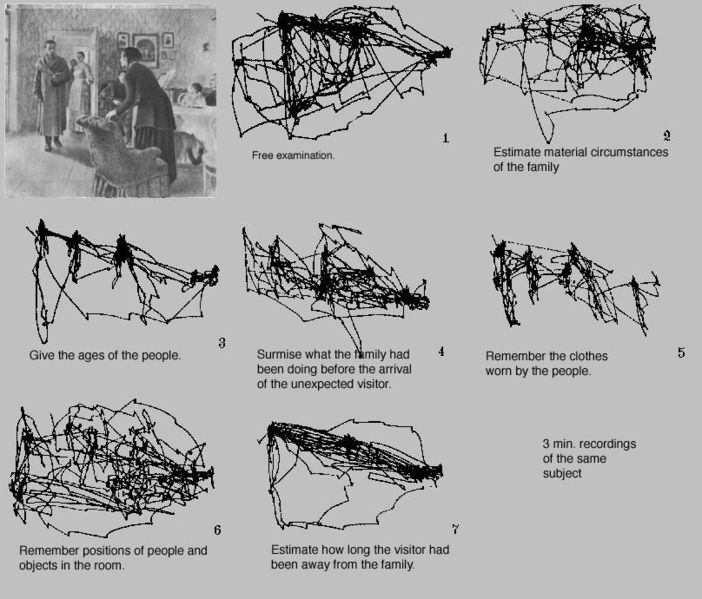
Working with a team from the Vision Lab in UBC’s Department of Psychology, Dr. DiPaola tracked viewers’ eye movements while they examined the original photographs and the Rembrandt-like portraits.

“When viewing the Rembrandt-like portraits, viewers fixated on the detailed eye faster and stayed there for longer periods of time, resulting in calmer eye movements,” DiPaola said. “The transition from sharp to blurry edges, known as ‘lost and found edges,’ also directed the viewers’ eyes around the portrait in a sort of narrative.”

The study is the first to scientifically verify the impact of these “eye-guiding” techniques on viewers and to attribute its origin to Rembrandt. Viewers also preferred portraits with this “eye-guiding narrative” to the original photographs with uniform details across the tableau.

Collective Intelligence: Number of Women in Group Linked to Effectiveness…

“We set out to test the hypothesis that groups, like individuals, have a consistent ability to perform across different kinds of tasks.  We found that there is a group collective intelligence which predicts a group’s performance in many situations.
 

In groups where one person dominated, the group was less intelligent than those where the conversational turns were more evenly distributed.” Teams containing more women demonstrated greater social sensitivity and in turn greater collective intelligence compared to teams containing fewer women.

“Imagine if you could give a one-hour test to a top management team or a product development team that would allow you to predict how flexibly that group of people would respond to a wide range of problems. That would be an interesting application. We also think it’s possible to improve the intelligence of a group by changing the members, teaching them better ways of interacting, or giving them better electronic collaboration tools.”

“Having a bunch of smart people in a group doesn’t necessarily make the group smart. The whole adds up to something other than the sum of its parts.”